Most warehouse security problems begin quietly.
A gate stops latching reliably during overnight shifts. Delivery verification gets looser as the day gets busier. Crews grow used to unfamiliar vehicles rolling onto the property after midnight, so irregular activity stops standing out and blends into the normal rhythm of operations.
Nothing looks serious at first. Freight keeps moving. Shipments stay on schedule. The property still looks secure from the street, until an incident forces management to take a hard look at how the facility actually runs after hours.
Across Southern Nevada, that scenario is playing out at a larger scale than ever. The Las Vegas Valley is adding millions of square feet of new manufacturing and distribution space, concentrated in North Las Vegas, the Apex Industrial Park, Henderson, and the I-15 corridor. As these buildings rise, lease up, and switch on overnight operations, the security gaps that were easy to ignore at a smaller scale start carrying real cost.
Las Vegas Warehouse Security Expectations Are Rising
Warehouse operators throughout Las Vegas are running bigger facilities, longer hours, and more complex freight activity than industrial properties handled even a few years ago. Distribution centers keep expanding across the valley, and freight movement increasingly stretches well past traditional business hours.
Most industrial facilities already have cameras, fencing, and alarm systems. The harder challenge is maintaining real visibility across an environment where activity never fully stops, and most warehouse security issues get caught too late, after inventory, operations, or customer timelines have already taken the hit.
A warehouse running overnight is a completely different security environment than an office that empties out at 5:00 p.m. Vendors arrive outside standard hours. Carriers move through the yard all night. Employees rotate between shifts while trailer yards and loading docks stay partially active around the clock.
Surveillance can document an incident after it happens, but cameras alone don't verify credentials, inspect the perimeter, or flag unusual behavior while it's unfolding. Facilities operating overnight repeatedly discover that footage explains problems rather than preventing them. For a deeper look at this dynamic, see our guide on guards vs. cameras: what actually prevents crime.
From Construction Site to Distribution Center: Security Across the Build Lifecycle
Security risk on an industrial property doesn't start the day the building opens. It starts the day ground breaks.
Active construction sites in Las Vegas are high-value, low-supervision targets, especially overnight and on weekends. Copper wire, tooling, fuel, equipment, and staged building materials sit exposed across a large footprint with limited oversight. Theft and vandalism during the build phase don't just cost the value of what's taken; they cause schedule delays, insurance complications, and budget overruns that ripple through the entire project. HK Security provides dedicated construction site security for exactly this stage.
That exposure doesn't disappear at completion. It changes shape. A finished distribution center inherits the same large perimeter, the same blind spots, and the same after-hours quiet, now combined with valuable freight and continuous operations. Facilities that plan security as a continuum, from active job site through commissioning and lease-up into full operation, avoid the gap that opens when a building goes live before anyone has thought through how to protect it.
For developers and operators tied to the current wave of Las Vegas industrial construction, the most effective approach is to treat security as part of the project, not an afterthought once the tenant moves in.
Trailer Yard Security for High-Volume Distribution Centers
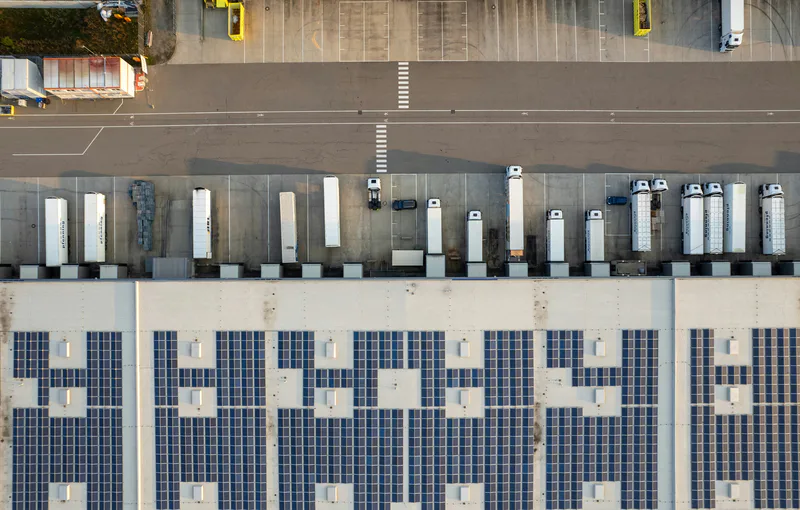
Trailer yards are some of the lowest-visibility areas on any industrial property, particularly overnight. From a distance, activity can look minimal even while parked trailers hold valuable freight sitting unattended for hours at a time.
Facilities relying only on perimeter cameras may not catch a problem until long after it's over. Footage might explain what happened, but the operational disruption still lands. And large properties get dramatically harder to monitor once trailer storage, outdoor inventory, and overnight freight activity spread across multiple zones of the site.
Large trailer yards invite specific risks: unauthorized vehicle access, cargo theft, perimeter breaches, and unmonitored movement between trailers after hours. Those environments benefit from active visibility: mobile patrol coverage that inspects perimeter conditions and low-traffic areas, rather than static observation alone. The larger the outdoor footprint and the heavier the overnight freight movement, the more a facility needs consistent patrol coverage instead of attention concentrated on the front gate.
Overnight Warehouse Operations Create Different Risks
Warehouses that run overnight face a different set of vulnerabilities than facilities that shut down completely after business hours.
Management oversight thins out late at night. The surrounding industrial areas go quiet. Overnight crews focus on operational pace, which lets irregular activity blend into the normal flow. Shortcuts creep in: access procedures loosen, verification gets inconsistent, and people stop questioning unfamiliar vehicles once after-hours traffic starts to feel routine.
That's the core problem: an environment where unusual activity no longer looks unusual to the people working inside it. It's also why warehouse security is far more effective when someone is actively identifying irregular activity in real time instead of reviewing incidents hours later. Personnel who can spot a problem early deliver more practical value than a recording someone watches the next morning.
Distribution Centers vs. Smaller Warehouses: Right-Sizing Coverage
Not every industrial property needs the same level of coverage.
A smaller warehouse storing limited inventory with little overnight activity may only need periodic patrol coverage and solid perimeter visibility after hours. A high-volume distribution center moving freight continuously across multiple shifts operates under entirely different conditions.
Large distribution facilities involve constant movement among drivers, vendors, employees, and freight. At that scale, security is less about a visible guard post and more about preserving accountability across a fast-moving environment. Loading docks are the classic example: during busy periods, nearly every interaction looks routine. Trucks arrive constantly, vendors come and go, and crews stay heads-down on freight schedules. An unfamiliar vehicle backed into the wrong dock may not draw a second look when dozens of similar interactions happen every hour.
Facilities operating at that scale generally benefit from layered coverage: access monitoring, active patrol visibility, and personnel who understand logistics environments rather than generic commercial guarding. Read more in our overview of workplace security solutions for Las Vegas businesses.
Outdoor Storage and Yard Exposure
Outdoor storage tends to get less operational attention than primary warehouse space, even though it creates significant after-hours exposure.
Construction materials, pallets, equipment, and staged inventory often sit visible from the perimeter while far from active oversight. Large outdoor lots create blind spots where unauthorized activity is hard to catch quickly. And industrial theft targeting these areas rarely looks like a dramatic break-in. It's incremental. Materials disappear intermittently. Equipment walks off without authorization. Access points get harder to monitor as a property grows.
Facilities with extensive outdoor storage benefit from stronger perimeter oversight, active patrol coverage, and regular inspection of the low-traffic areas where visibility naturally weakens overnight.
Access Control: The Difference Between Organized and Reactive
Many warehouse security problems trace back to inconsistent access procedures, not physical security failures.
Industrial facilities process a constant flow of employees, vendors, contractors, carriers, and maintenance personnel all day. Once verification gets inconsistent, accountability erodes fast, and operational pressure naturally creates gaps in fast-moving environments where efficiency tends to win out over oversight.
Most facilities don't need highly restrictive systems so much as disciplined consistency. Someone should reliably know who entered the property, why they're there, and whether their activity lines up with expected operations. Facilities handling electronics, pharmaceuticals, construction materials, or other high-value inventory face even more pressure here. Inventory discrepancies become almost impossible to investigate once visitor records and delivery verification get sloppy.
The point of a security partner isn't to redesign your operation. It's to identify vulnerabilities, improve visibility, and support tighter control over the areas where operational pressure naturally opens gaps. HK's access control support is built around that principle.
Mobile Patrols vs. Standing Guards for Industrial Properties
Operators often ask whether mobile patrol coverage or standing guards are the better fit. The answer depends on how the property actually functions.
Mobile patrol coverage works well for facilities that need visibility across large outdoor areas or multiple operational zones. Patrol officers can inspect the perimeter, monitor trailer yards, find unsecured access points, and observe suspicious activity across wide sections of a site.
Standing personnel become more valuable when a facility needs continuous oversight. Warehouses managing active overnight freight, high visitor volume, or sensitive inventory often benefit from dedicated officers monitoring entrances, verifying credentials, and responding immediately when something looks off.
Many larger industrial properties end up needing both, depending on site conditions and operational demands. For a broader look at the trade-offs, see 5 common misconceptions about security guards.
Warehouse Security Is Really About Operational Control
Most warehouse operators aren't simply trying to prevent theft. Industrial facilities live and die on timing, coordination, staffing, and uninterrupted freight movement, and the financial impact of a security failure usually extends well beyond stolen property once you account for delays, disruption, and liability.
The strongest warehouse security programs protect operational stability across the whole property. Facilities that maintain consistent visibility, disciplined access procedures, and active oversight are far more likely to catch small issues before they snowball into expensive disruptions.
In short, warehouse security in Las Vegas works best when it's aligned with how industrial properties actually run day to day: freight movement, overnight schedules, outdoor storage, trailer activity, and access control all shape how a facility should be protected after hours.
Get a Warehouse Security Assessment in Las Vegas
If you're developing, leasing up, or operating a distribution center, logistics facility, or industrial property anywhere in the Las Vegas Valley (North Las Vegas, Apex, Henderson, the southwest submarket, or along I-15), HK Security can assess the gaps specific to your site and recommend coverage that fits how your facility operates.
HK Security is based in Las Vegas, fully licensed (Nevada PILB #2854), and led by security veterans with law enforcement and operations backgrounds.